


Maker's Notes
The 45-minute billboard
People hold a morning coffee for about 45 minutes. That cup is the cheapest advertising space your café will ever own, and most new cafés leave it blank.

Two cafés on the same street. Both pull a good shot. A week later you remember the name of one and not the other. The difference is almost never the coffee.
Here is the thing nobody tells you when you open a café: your brand does not live in the shop. It lives in the cup on the train. The pastry bag on someone's kitchen counter. The loyalty card that surfaces every time a wallet opens. By the time any of those are seen, the customer has already left the building, and the brand is doing its work without you in the room.
The trade press has a number for this. In an interview with Fresh Cup magazine, one cup supplier put it plainly: on average, people hold on to a morning coffee for about 45 minutes. Forty-five minutes of your name at chest height, walking through offices, trains, and school runs, shown to exactly the people who live and work near your shop. Media buyers would call that hyper-local out-of-home advertising and charge you for it. Your café generates it every time the door swings shut.
Most new owners spend the branding budget on the things that never leave: the signage, the menu, the chalk wall. Beautiful, and over the second the door closes. The smarter spend is on the things that walk out.
The five surfaces that actually go home
- The takeaway cup. Touched every sip, photographed constantly, carried for the better part of an hour through public space.
- The kraft sleeve. Cheaper to brand than the cup itself and often a better canvas, because uncoated kraft takes ink beautifully.
- The pastry bag. Goes home, gets opened on a kitchen counter, and regularly survives the evening as the household crumb-collector.
- The napkin. Small but constant. Stuffed into pockets and bags, found for days afterwards.
- The loyalty card. Lives in the wallet and gets seen at every card payment. The most repeated touchpoint by a wide margin, and the one with the best research behind it, which we will get to.
Marketing folk wisdom, backed by people who sell cups for a living, says it takes ten or more touchpoints to turn a stranger into a customer. A café that brands all five surfaces racks those up on autopilot.
The honest math of putting your name on a cup
Now the part that decides everything for a café in its first year: what it actually costs. Prices vary by vendor and volume, so here are the assumptions in the open, using typical published US supplier prices. Say you pour 100 takeaway cups a day, 360 days a year: 36,000 cups.
| The route | Cost for a year of cups |
|---|---|
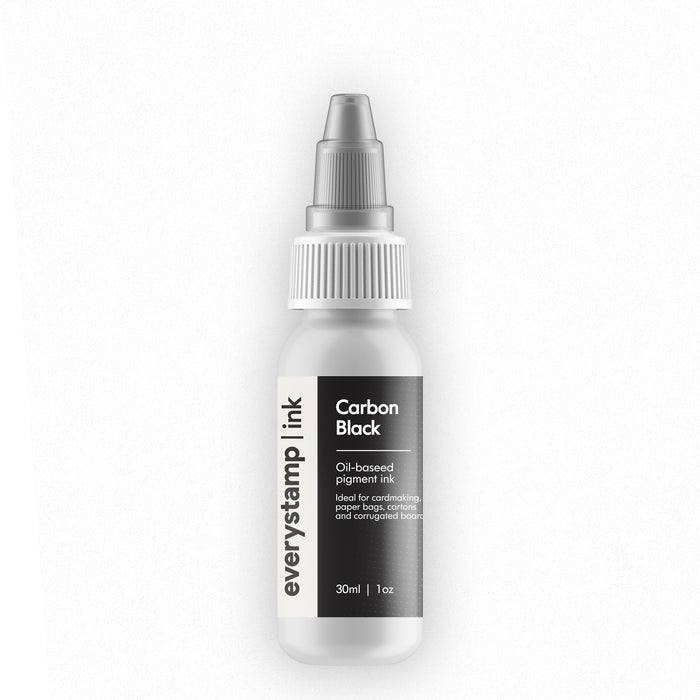
| Stamped kraft. Plain cups at wholesale, plus a custom logo stamp (~$30) and an oil-based ink pad with a re-inker (~$25 for the year). The cups cost what they cost either way; the branding itself is the stamp and the ink. | ~$55 in year one |
| Branded sleeves on plain cups. Fresh Cup pegs a case of custom-printed sleeves at under $200. Workable, but the sleeve is the branding, and it comes off. | ~$1,500+ per year |
| Custom-printed cups. Per Fresh Cup's supplier pricing, generic cups run 8 to 12 cents and printed ones 20 to 25 cents, a premium of roughly 12 cents per cup, usually with minimums of 1,000+ per size. | ~$4,300 premium per year |
Per year, on the same 36,000 cups, the branding spend looks like this. Hover over the bars for the working.
What a year of branded cups costs
36,000 cups. Same logo, three ways to get it on the cup.
The stamp bar is not a rendering error. It really is about 80 times cheaper than the printed-cup premium, and it brands the bags and napkins too.
Your numbers will move with volume and vendor, and at chain scale printed cups get much cheaper per unit. Run the math with your own quotes; for an independent café pouring a few hundred cups a day or fewer, the ranking survives any realistic inputs.
And here is the detail we enjoyed most in the research. Fresh Cup's own article, sponsored by a cup-printing company, quotes the co-founder of Alma Coffee advising new cafés that if printed cups would strain the budget, they should "consider hand-stamping cups for a while for a middle-of-the-road option." When the printer's own case study recommends the stamp as the starter move, that is about as honest as pricing advice gets.
The principle: same mark, every surface
The single biggest branding move a small café can make costs nothing extra. Consistency.
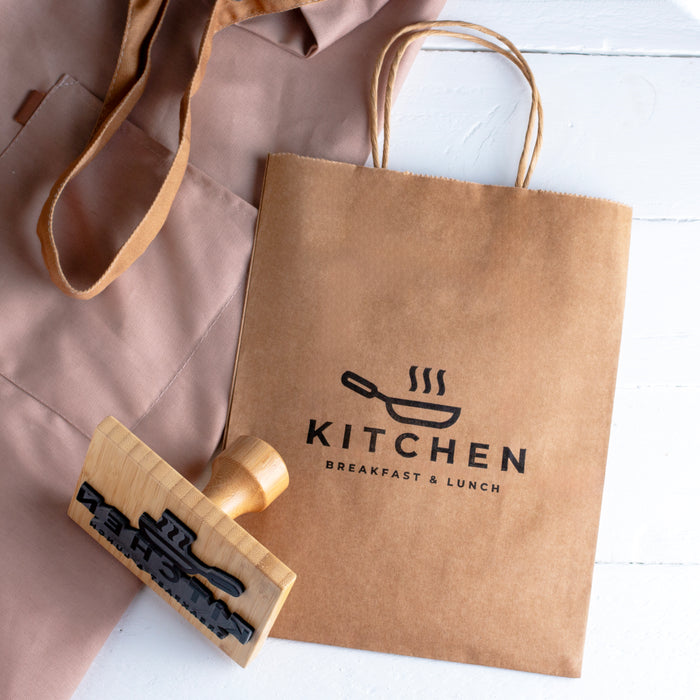
Same logo, same size, same ink colour, on the cup, the sleeve, the bag, the napkin, the loyalty card. When a customer's table holds four surfaces all carrying the same small mark, the brain reads established, even when the café is two weeks old. This is exactly where the stamp beats every other method: one coffee cup and sleeve stamp puts an identical mark on the cup, the sleeve, and the napkin, and a matching paper bag stamp carries it onto every pastry order, for the cost of ink.
Printed packaging makes consistency expensive, because every surface is a separate print run with its own minimum. A stamp makes consistency the default, because it physically cannot print two different logos.

"A café's brand is everything that leaves with the customer."
The loyalty card, and the study every café owner should know
Loyalty apps sound modern and convert badly for small cafés. Industry surveys of app behaviour find that the vast majority of downloaded apps are abandoned within a month, so if only a slice of your regulars ever installs yours, the "loyalty program" covers a slice of your regulars. Meanwhile a 2025 National Coffee Association survey found that 79% of daily coffee drinkers say a loyalty program influences where they buy. The demand is real; the app is the wrong container for a ten-seat café.
The paper card with an ink stamp still works, and there is a famous experiment that shows how to make it work harder. In a 2006 study in the Journal of Consumer Research, marketing professors Joseph Nunes and Xavier Drèze gave 300 car wash customers loyalty cards. Half got a card needing 8 stamps for a free wash. The other half got a card needing 10 stamps, with 2 already stamped as a "special promotion." Both cards required exactly 8 purchases. Same deal, different framing.
The endowed progress effect
Share of customers who completed the loyalty card (Nunes & Drèze, 2006)
A head start people feel they have been given, even an artificial one, nearly doubles follow-through. Researchers call it the endowed progress effect.
The café translation is almost embarrassingly simple: print "buy ten, get one free" cards, and stamp the first two squares yourself when you hand one over, with a smile and a "first two are on us." Same stamp that marks your cups. The customer walks out with visible progress toward a goal, your logo in their wallet, and, per the study, roughly double the odds of coming back to finish the card.
A short note on aprons and napkins
If the budget allows one more thing, make it the apron. A plain canvas apron with the same logo pressed on the chest, using a fabric and clothing stamp with textile ink, turns staff into part of the visual system for the cost of the apron itself. Customers register it instantly, and it photographs well, which matters more than it used to.
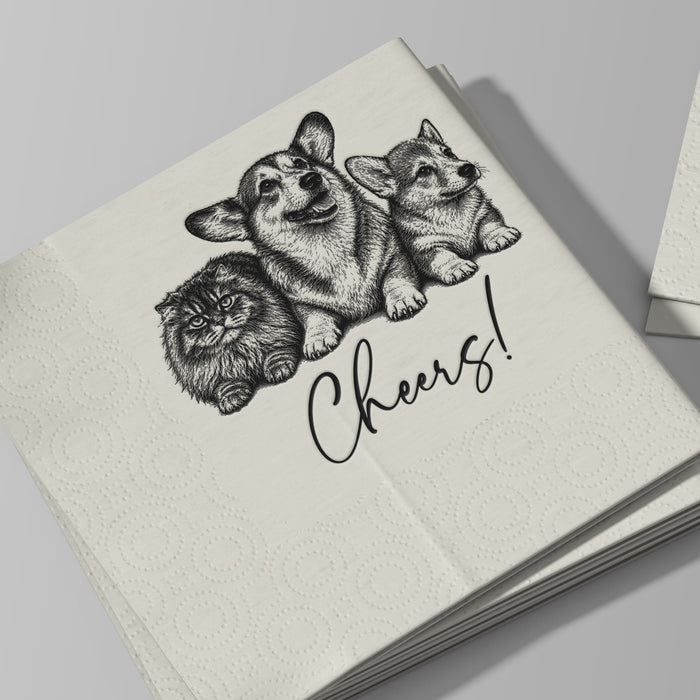
Napkins are the sleeper. A small mark in one corner, applied in a batch before service, changes how the whole table reads. Nobody itemises the napkin, but everybody notices when a table looks considered.

To be fair: when printed cups win
An honest comparison names the cases where the stamp loses. If you run several locations pouring thousands of cups a day, printed pricing falls hard at volume and full-colour, edge-to-edge printing does things no stamp can, including seasonal designs and photographic artwork. Chains print for good reasons.
The stamp's honest weakness is that it is a hand process. Each impression takes a second or two and carries the small variation of a human hand. On a kraft cup that variation reads as handmade, which for an independent café is usually the whole point. If your brand needs to look like it came off a production line, print.
For a café in its first years, the stamp wins on cost, on speed to first branded cup (the day it arrives, versus weeks of print lead time), on flexibility (a rebrand costs one new stamp, not a shelf of obsolete cups), and on the thing printing cannot buy at any price: the same mark on every single surface that leaves your counter.
Your café branding questions, answered
- Should I stamp the cup or the sleeve?
- The sleeve, usually. Uncoated kraft sleeves take ink cleanly, they are easy to stamp flat in batches before service, and swapping designs costs nothing. Many cups have a light wax or PE coating that needs a quick-dry, oil-based pigment ink; sleeves do not care.
- Will the ink survive condensation from an iced drink?
- Use an oil-based, waterproof pigment ink made for paper and card. It is touch-dry in seconds and holds up through condensation, handling, and rain. Water-based inks will smear; this is the one place not to economise.
- How fast can staff realistically stamp cups?
- One impression takes a second or two. The trick is batching: a stack of sleeves or flat bags stamped during the pre-open lull covers the whole day. Nobody stamps to order during a rush.
- How long does one ink pad last?
- An ink pad is good for thousands of impressions, and a small re-inker bottle revives it many times over. A café running 100 to 200 cups and bags a day typically gets six to twelve months from a pad-and-re-inker setup before spending another few dollars.
- Does the pre-stamped loyalty card trick feel manipulative?
- The study's authors found the head start works when there is a reason attached, like a welcome promotion, and customers take it exactly as offered: a small gift. You are giving a real discount on the path to a real reward. The framing is generous, and it happens to be effective.
- What about the menu?
- Print the menu cleanly, then press the same mark on the cover. A printed menu with a hand-pressed logo reads as more considered than either alone, and it keeps the five-surface consistency going inside the shop too.
If you want to run the experiment, our coffee cup and sleeve stamps are made for exactly this: your logo, deep-etched, wood-mounted, ready for the morning batch of cups, sleeves, bags, and loyalty cards.
A café's brand is everything that leaves with the customer. The cup at the bus stop is a 45-minute billboard you already paid for. The card in the wallet is a behavioural study working in your favour. All the stamp does is make sure your name is on them, two seconds and a fraction of a cent at a time.